The cement industry and the processing of Supplementary Cementitious Materials (SCMs) are undergoing significant transformation driven by sustainability targets, fluctuating raw material availability, rising energy costs, and increasing performance expectations from end users.
Producers are being asked to do more with less energy, fewer emissions, tighter margins and more variability in feedstocks.
Introduction
Cement production is foundational to global infrastructure yet it remains one of the most operationally complex and energy-intensive industrial processes. The growing use of SCMs including fly ash, slag, calcined clays and agricultural byproducts has become essential for reducing clinker content, lowering carbon emissions, and improving concrete performance.
However, these materials introduce significant variability into the production process due to differences in moisture content, particle size, bulk density and chemical composition.
As cement producers increase their reliance on SCMs, processing systems must adapt accordingly. Standardized drying, thermal treatment and handling systems often lack the flexibility needed to effectively manage the variability in supplementary materials for producing cement.
Custom-engineered solutions are designed to integrate seamlessly into existing process flows while accounting for material-specific challenges. By aligning equipment performance with real-world operating conditions, producers can stabilize operations, protect product quality, and improve overall plant economics.
As the industry evolves toward higher performance mixes and sustainability goals, producers must consider:
- Variability in raw material quality.
- Energy-intensive processing requirements.
- Need for improved operational efficiency.
Industry Pain Points and Market Challenges
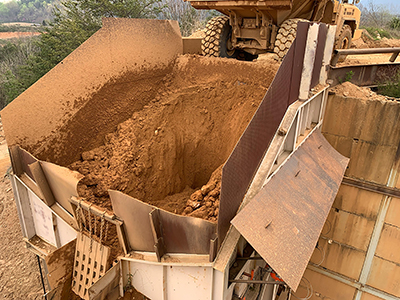
Inconsistent Material Quality – One of the most persistent challenges in SCM and cement processing is inconsistencies with the material quality that is received. SCMs sourced from different regions, suppliers or production methods can vary widely in moisture content, fineness and reactivity.
These inconsistencies directly impact downstream processing, leading to unstable drying performance, uneven thermal treatment and variable final product quality.
When moisture levels fluctuate, drying systems may over-dry or under-dry material resulting in wasted energy or poor product performance. Inconsistent thermal exposure can also limit the effectiveness of SCM activation and reducing its contribution.
Without equipment designed to accommodate these variations, producers are forced to accept higher reject rates, increased process intervention, and reduced operational confidence — all which result in a disappointing bottom line.
Material Handling and Flow Issues – Bulk material handling remains a critical yet frequently underestimated challenge in cement and SCM processing. Materials such as fly ash, slag and fine powders are prone to bridging, rat-holing, segregation and dust generation.
Poorly designed handling systems lead to frequent blockages, unplanned downtime, excessive maintenance and safety concerns for plant personnel.
Energy Consumption and Emissions Pressure – Drying and thermal processing stages account for a substantial portion of a cement plant’s energy consumption. As fuel prices rise and environmental regulations tighten, inefficient thermal systems become a significant liability.
Legacy equipment often lacks modern heat recovery, insulation and control capabilities, leading to excessive fuel use and unnecessary greenhouse gas emissions.
The Role of Custom Drying, Thermal Processing and Handling Equipment
Custom-engineered equipment addresses these challenges by aligning mechanical design, thermal performance and control strategies with the specific needs of each application. Rather than forcing materials to conform to equipment limitations, custom systems are designed to work with the material as it exists in real-world conditions.
Custom Drying Solutions – Custom drying systems are engineered based on detailed analysis of material moisture content, particle size and heat sensitivity. By choosing the right drying technology and tailoring airflow patterns, temperature zones, and residence time, these systems deliver uniform moisture reduction without damaging material integrity.
Advanced control options allow operators to respond dynamically to feed variability, maintaining consistent outlet moisture even when inlet conditions fluctuate.
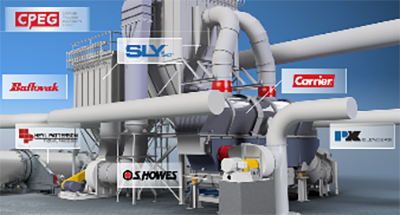
When deciding on the best drying technology for a processing operation, continuous pilot testing at the test lab at Carrier Process Equipment Group (CPEG) will confirm any assumptions. Whether it is rotary drying, vibrating fluid bed drying, flash drying or non-vibrating fluid bed drying with immersed heat exchangers, the CPEG lab is capable of demonstrating it all.
Engineered Thermal Processing Systems – Thermal treatment is essential for activating SCMs and preparing them for cement formulations. Custom kilns, calciners and thermal reactors provide precise temperature control, optimized residence time and efficient heat transfer, with options for waste heat recovery or alternative fuels to reduce energy costs. Cooling solutions are also available to ensure safe handling and protect downstream equipment. Consistent thermal processing improves SCM reactivity, helping producers increase substitution rates, lower clinker usage, and enhance both sustainability and product performance.
Tailored Material Handling Systems – Custom material handling solutions focus on maintaining consistent flow while minimizing degradation, segregation and dust. Equipment such as specialized conveyors, feeders and discharge systems are designed around material characteristics and the cement producers’ plant layout to ensure reliable operation across a wide range of conditions.
Customizing the equipment ensures satisfactory operation for materials that are dusty, corrosive, erosive and even at extreme temperatures.
Effective handling systems reduce downtime and maintenance requirements and improve workplace safety. When integrated with drying and thermal processes, they create a cohesive system that supports continuous, predictable production.
Business Impact and Competitive Advantage
The adoption of custom drying, thermal and material handling equipment delivers measurable business impact that extends well beyond day-to-day operational improvements. In an industry characterized by high capital intensity and tight margins, even incremental gains in efficiency, reliability and product consistency translate into meaningful financial performance over the life of a plant.
Custom-engineered systems are designed to align with specific production goals, allowing producers to extract maximum value from their raw materials, energy inputs and labor resources.
Collectively, these advantages position custom processing and material handling equipment as a long-term competitive asset rather than a fixed cost. By lowering operating expenses, improving reliability, enhancing product consistency and enabling supply chain adaptability, custom-engineered systems help cement producers differentiate themselves in an increasingly competitive and sustainability-driven marketplace.
Designing for Resilience in a Changing Market – As cement producers face increasing uncertainty in raw material availability, energy costs and regulatory requirements, processing systems must be designed with long-term adaptability in mind.
Custom drying, thermal and material handling equipment provides the flexibility needed to accommodate evolving SCM sources, changing material specifications and future production demands without compromising performance or reliability.
By engineering systems around real-world variability rather than fixed assumptions, producers can maintain stable operations even as inputs change. This resilience enables faster qualification of alternative materials, smoother integration of new processes and greater confidence in capital investments positioning plants to respond proactively to market shifts rather than reactively managing disruptions.
The CPEG Test Lab and Innovation Center helps reduce technical risk by validating custom solutions before full-scale implementation. As SCM variability increases, laboratory testing provides critical insight into material moisture behavior, flow characteristics and thermal response. This data-driven approach ensures equipment designs are properly aligned with real- world operating conditions prior to having a production line designed and manufactured.
By verifying drying efficiency, residence time, and material handling behavior in real continuous pilot scale systems, producers can shorten project timelines and reduce commissioning costs. This capability enables confident evaluation of new SCM sources and alternative materials to support supply chain flexibility and long-term sustainability goals.
Conclusion
As the cement industry continues to evolve, the ability to process variable materials efficiently and sustainably has become essential. Custom drying, thermal and material handling equipment provides a proven pathway to overcoming today’s operational and supply chain challenges.
By investing in solutions designed specifically for their materials and processes, cement producers can improve consistency, reduce costs, enhance sustainability and position themselves for long-term success and a better bottom line in an increasingly demanding market.
Looking ahead, the role of custom-engineered processing equipment will continue to expand as cement producers balance performance, sustainability, and supply chain uncertainty. Facilities that invest in adaptable, material-specific drying, thermal, and material handling systems are better positioned to integrate emerging SCMs, meet evolving regulatory expectations, and respond to market demands with confidence.
By prioritizing engineered solutions that deliver consistency and resilience, producers can not only address today’s challenges but also create a flexible foundation for long-term growth and competitiveness.